
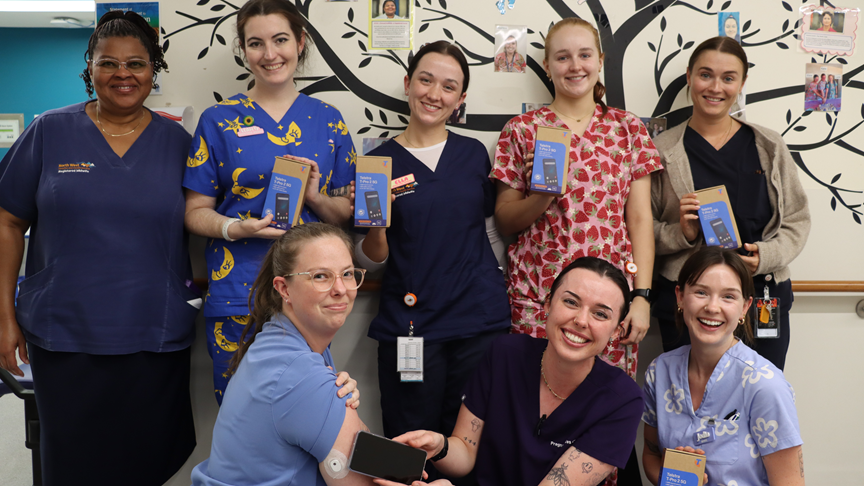
Women across the North West experiencing diabetes during pregnancy will have better access to specialist maternity care thanks to a partnership between the North West Hospital and Health Service (NWHHS) and Telstra.
Telstra has donated 20 mobile phones and 20 prepaid SIM cards with 12 months of connectivity to the North West Hospital and Health Service (NWHHS), ensuring women who do not have access to a suitable mobile device can use Continuous Glucose Monitoring (CGM) technology throughout their pregnancy.
CGMs allow women with diabetes in pregnancy to continuously monitor their blood glucose levels, with readings shared directly with their healthcare team. The technology helps clinicians identify trends, provide timely advice and tailor care, leading to improved health outcomes for both mother and baby.
Director of Obstetrics and Gynaecology Dr Natalie Kiesey-Calding said while CGM technology has transformed diabetes care, it relies on access to a compatible smartphone.
"For some women, particularly those living in remote communities or experiencing financial hardship, not having access to a suitable phone can mean they miss out on the full benefits of this technology," Dr Kiesey-Calding said.
"These phones will remove that barrier, allowing more women to monitor their glucose levels in real time while staying connected with our maternity team throughout their pregnancy."
"It means we can identify concerns earlier, provide support sooner and ultimately help women achieve healthier pregnancies and healthier babies."
The initiative is expected to particularly benefit First Nations women across the North West, where rates of diabetes during pregnancy are higher than the national average.
Regional General Manager Northern Queensland Rachel Cliffe said Telstra was proud to support an initiative using technology to improve health outcomes.
"Connectivity is about much more than technology – it's about helping people access the services, support and opportunities they need," Ms Cliffe said.
"We're proud to support this initiative, which helps First Nations women experiencing diabetes during pregnancy stay connected to important health services. It shows the powerful role technology and connectivity can play in improving health outcomes and helping communities thrive."
Dr Kiesey-Calding said the donation demonstrates how partnerships between healthcare and industry can make a real difference for rural and remote communities.
"Every woman deserves access to the best possible maternity care, regardless of where she lives or whether she owns a smartphone," Dr Kiesey-Calding said.
"We're incredibly grateful to Telstra for recognising a simple solution that will have a lasting impact on families across the North West."