
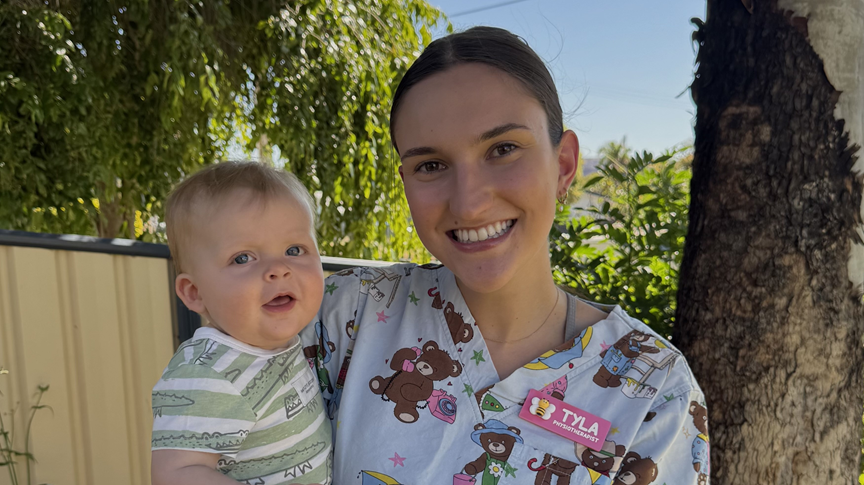
 Physiotherapist, Tyla, with patient Beau
Mount Isa-based First Nations Graduate Physiotherapist Tyla Stallan is leading the way in early intervention services for high-risk babies, ensuring families in the North West have access to culturally safe, family-centred care close to home.
After completing the First Nations Leadership Program with Indigenous Allied Health Australia (IAHA) and building on a 2021 University placement with the Learning through Everyday Activities with Parents for Cerebral Palsy (LEAP-CP) project team, Tyla identified an opportunity to strengthen care for babies in the Mount Isa Hospital Special Care Nursery.
“I’ve always been passionate about supporting families from the very start,” Ms Stallan said.
“By developing screening criteria for high-risk babies in Special Care, we’re ensuring no bub slips through the cracks when it comes to accessing early support.”
Under the new process, every baby in the Special Care Nursery is screened to make sure they are developing well. High-risk babies are identified based on screening criteria Tyla developed and benchmarked with other Hospital and Health Services, considering factors such as birth history, weight, gestation, and other early screening assessments.
Babies who meet the criteria are monitored by the Physiotherapy and Child Development Service teams in Mount Isa, referred to the Queensland Early Detection Intervention Network (QEDIN) for assessment, and if eligible, placed on either the intervention or control arm of the LEAP-CP study.
LEAP-CP is a culturally adapted, parent-first program designed to support families with high-risk babies. The intervention arm provides 30 weekly home visits delivered by a First Nations health worker, who supports parents through goal-directed activities, CP learning games, and caregiver education modules. While the program is currently being rolled out as part of a research trial, it is designed to empower parents to build their baby’s motor and cognitive skills through everyday activities in their own home.
“This is an incredible opportunity to build something sustainable here in Mount Isa,” Ms Stallan said. “Our long-term vision is for LEAP to be delivered by local First Nations health workers, making care not only accessible but truly community-led.”
Physiotherapy is a natural fit for this work, linking to the Queensland Government’s First 1000 Days initiative. Research shows that prevention and early intervention in a child’s first 1000 days are pivotal to their lifelong health, cognition, and well-being.
Mount Isa families are already beginning to benefit. Several high-risk infants have been identified and referred for LEAP eligibility, and the first baby in Mount Isa has now officially been recruited into the LEAP-CP pathway.
The LEAP-CP program is already successfully operating in Townsville, Cairns and other sites across Queensland. Tyla hopes the North West experience will pave the way for the program to be embedded locally, with First Nations health workers leading delivery for families across the region.
“This project feels like a full-circle moment for me. From starting as a student in Townsville, to now leading the development of a service for families in Mount Isa just four years later,” Ms Stallan said.
Executive Director Allied Health, Lynette Stenhouse, said the project showed the importance of developing services that grow from community needs.
“Tyla has taken her own journey as a student and turned it into something that will shape services for years to come. This is exactly the type of innovation we need culturally safe, evidence-based and designed to be led locally into the future.” Ms Stenhouse said.
By embedding early detection and intervention into the care pathway, this project is helping babies in the North West get the best possible start to life, while supporting families to grow strong, healthy and connected.